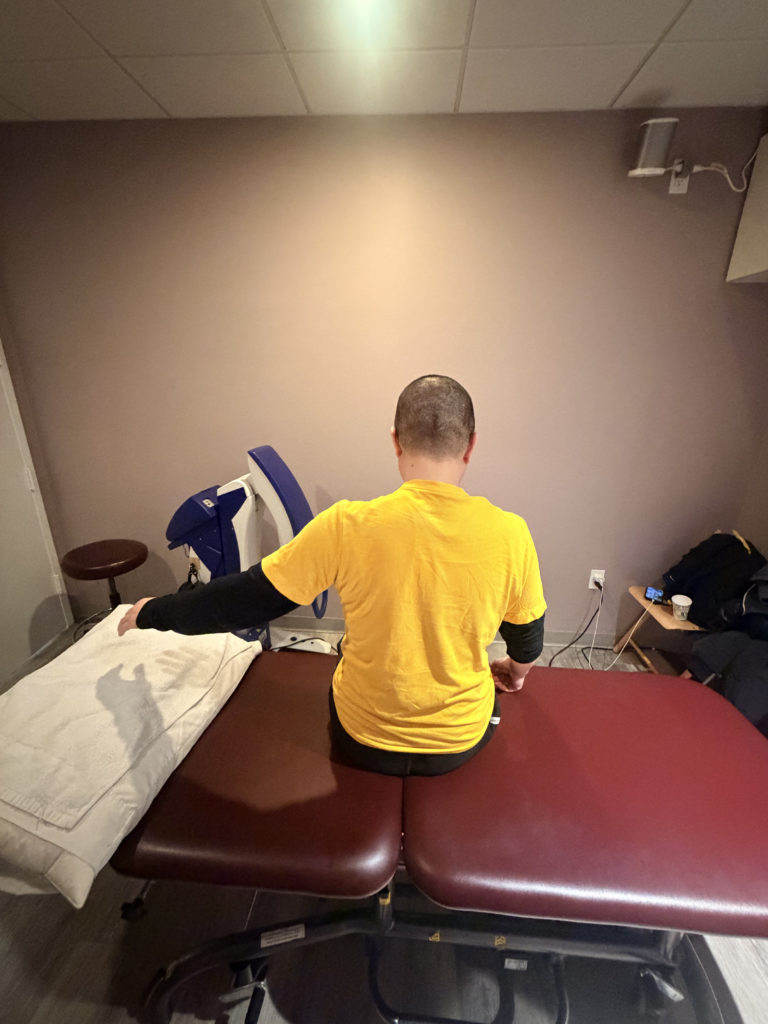
Shoulder pain can be incredibly frustrating, especially when it doesn’t go away for months. Recently, I treated a patient who came in with persistent left shoulder pain that started after he twisted his shoulder. Even after more than six months, the pain was still limiting his daily life, such as putting on a jacket.
Patient History & Main Complaints
- Male, in his 40s
- Left shoulder pain started after a twisting injury
- Pain duration: over 6 months
- Pain with:
- Shoulder flexion (raising forward and upward)
- Shoulder abduction (raising sideway): most painful and most limited)
- Horizontal adduction (crossing the arm)
- Functional limitation: Putting on a jacket caused pain
Initial Assessment
During the evaluation, I found:
- Shoulder flexion ROM: Almost the same on both sides, but the left side was compensating with trunk/neck movement
- Shoulder abduction: Less than 45 degrees, with significant pain
- Reaching behind the back: Slightly limited with compensation
- Horizontal adduction: Painful and limited
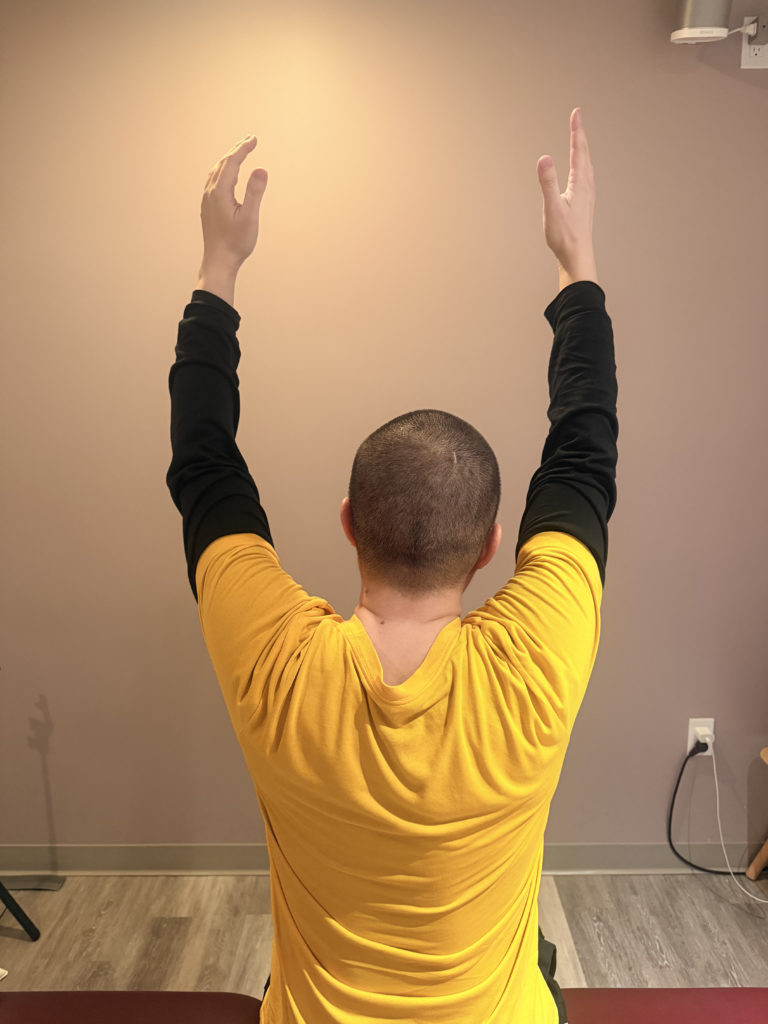
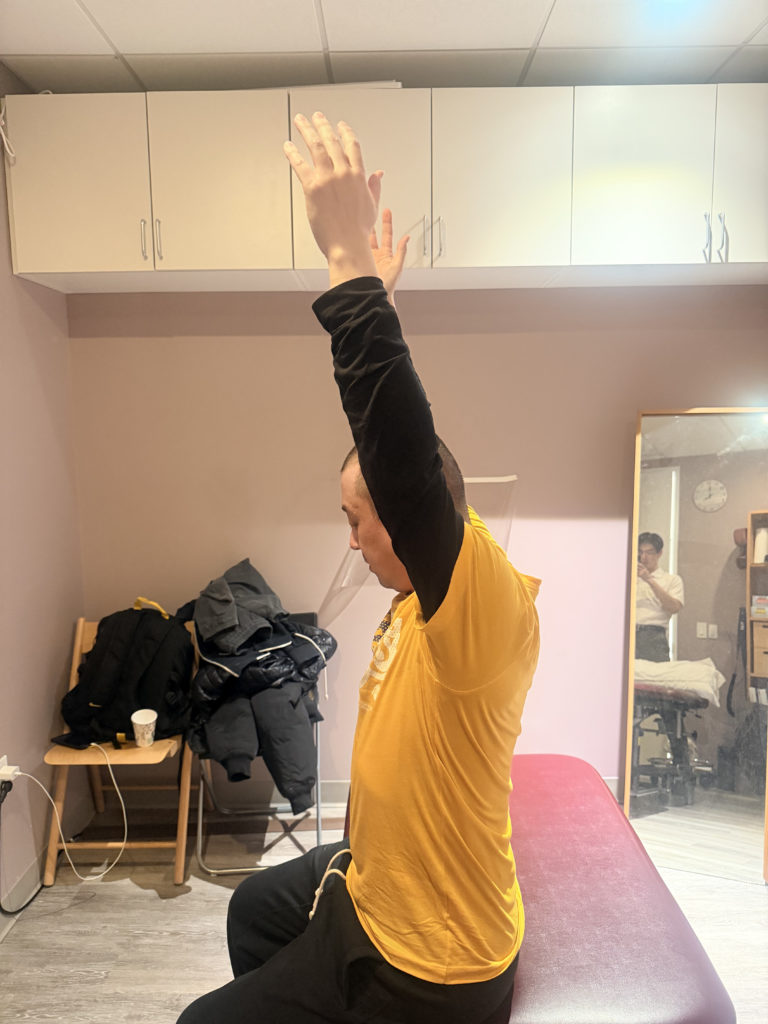
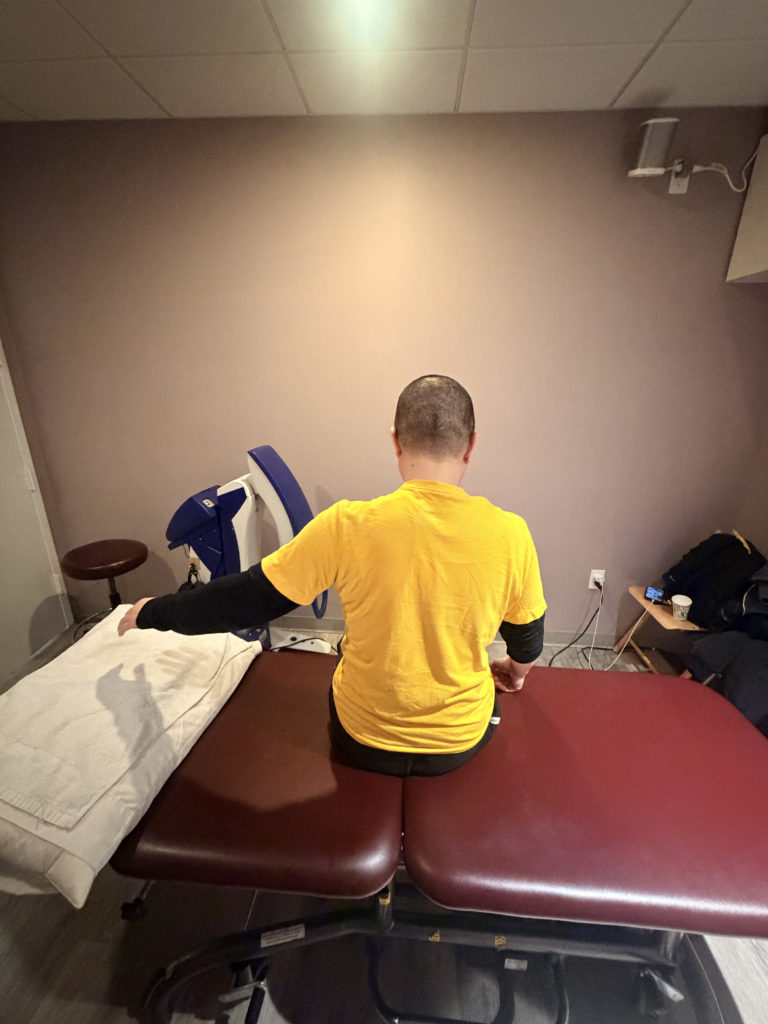
Based on the movement tests and the location of pain, I concluded that the main source of pain was the chronic inflammation of the biceps brachii tendon, along with:
- Reduced subacromial space
- Significant shoulder muscle tightness
- Altered shoulder mechanics and compensation patterns
Start Treatment With Rib Cage and Spine
When shoulder pain lasts for a long time, the body often adapts in unhelpful ways. In this case, the patient had developed:
- Cervical (neck) tightness
- Rib cage and thoracic spine stiffness
- Altered movement patterns during shoulder motion
So instead of jumping straight to the painful shoulder, we first worked on:
- Posterior mid-thoracic spine mobility
- Upper to lower lateral rib cage mobility
- Cervical spine mobility
Interestingly, his shoulder motion started to improve even before I touched the shoulder, just by restoring rib cage and thoracic mobility. This shows how closely the shoulder is connected to the spine and rib cage.
Soft Tissue & Scapular Work
Next, I addressed the significant soft tissue stiffness around the shoulder, especially near the pain source (the biceps tendon area). Treatment focused on:
- Pectoralis major & minor
- Upper trapezius
- Levator scapulae
- Posterior shoulder muscles (infraspinatus, teres major/minor)
- Latissimus dorsi
- Serratus anterior
At the same time, I worked on improving scapular (shoulder blade) movement, because good scapular mechanics are essential for pain-free shoulder motion.
Shoulder Joint Mobilization
After reducing soft tissue restrictions and improving scapular mobility, I finally treated the shoulder joint itself.
Findings:
- Subacromial space was limited
- Humeral head was shifted anteriorly
Treatment:
- Joint mobilization to increase subacromial space
- Re-centering the humeral head into the glenoid fossa
Then we used PNF (proprioceptive neuromuscular facilitation) and active movements to help the patient’s muscles maintain the newly gained mobility.
Shockwave (RPW) & MLS Laser Therapy
To further improve tissue mobility and pain relief, we added:
- Radial Pressure Wave (RPW / Shockwave)
- MLS Laser Therapy
These modalities help with:
- Pain reduction
- Improving tissue healing
- Reducing chronic soft tissue sensitivity
Results After the Session
Before treatment:
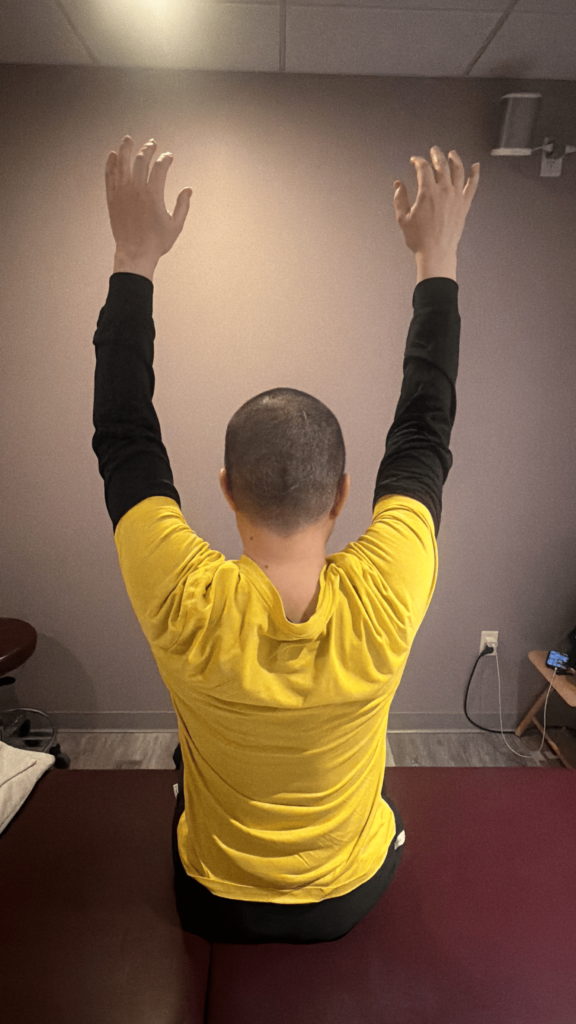
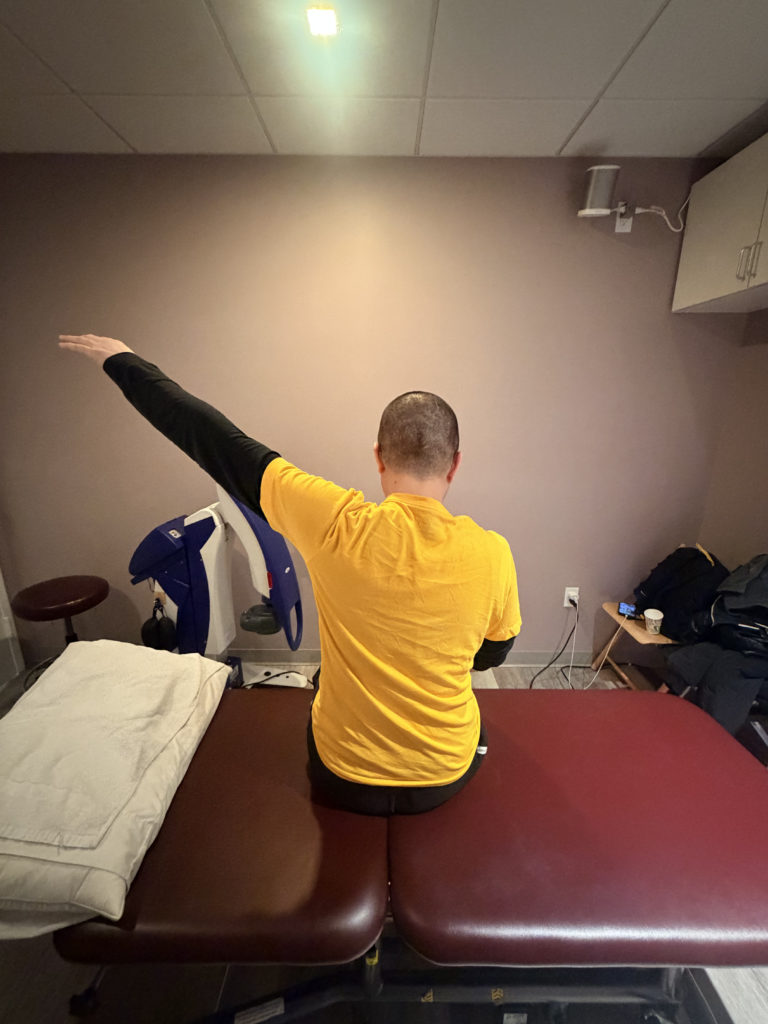
- Could not raise the arm more than 45 degrees due to pain
After the session:
- Could raise the arm over 90 degrees
- Significant improvement in both pain and mobility
We finished the session with:
- Education on icing
- Bed positioning advice to reduce shoulder stress at night
Summary: Shoulder Pain Is Rarely Just a Shoulder Problem
This case shows why effective shoulder treatment often needs to include:
- The rib cage and thoracic spine
- The neck
- Scapular mechanics
- Soft tissue mobility
- Joint alignment
- And sometimes advanced modalities like shockwave and MLS laser
By treating the whole movement system, not just the painful spot, we can often get faster and more meaningful results—even in chronic cases.