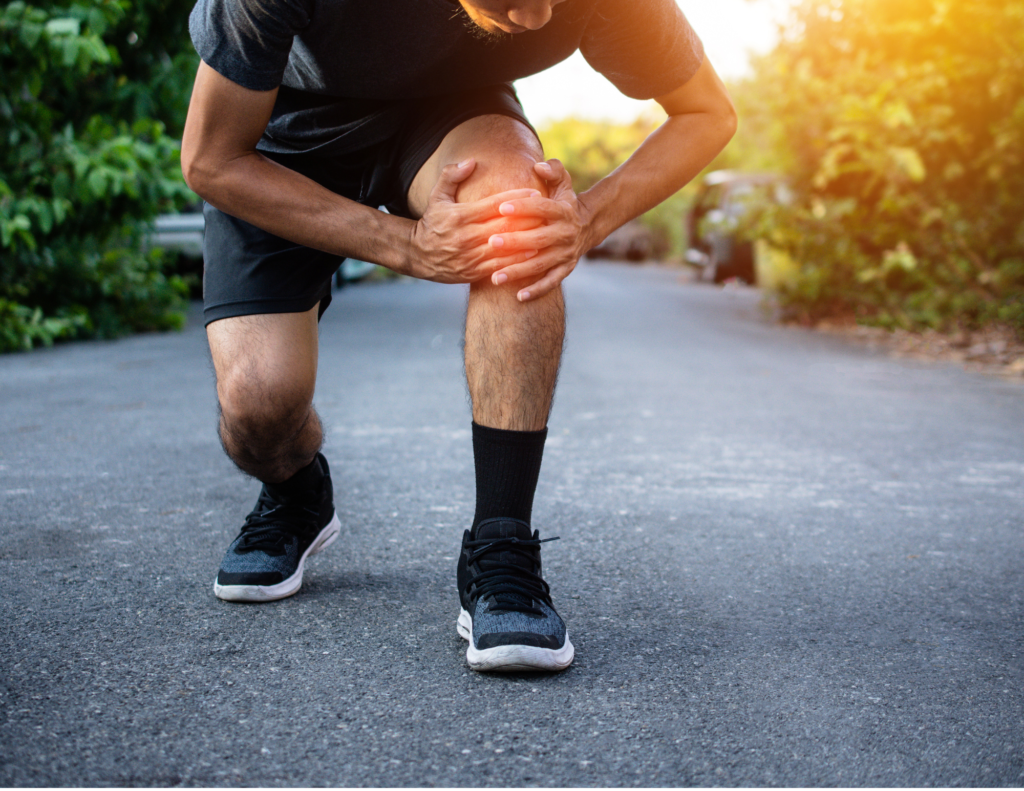
Many runners believe that lateral knee pain comes from a “tight IT band,” so they spend a lot of time foam rolling or massaging the outside of the thigh. While this may temporarily feel good, IT band massage alone rarely resolves knee pain.
If you’ve been rolling your lateral thigh consistently and your pain keeps coming back, the real issue may not be the IT band itself. In many cases, knee pain is a symptom, not the source of the problem.
Knee Pain Does Not Always Come From the Knee
The knee joint is designed mainly for bending and straightening. Unlike the hip or ankle, it has very limited ability to rotate or side-bend. Because of this anatomical limitation, the knee often absorbs excessive mechanical stress when other body regions don’t move or control movement well.
Common contributors to knee pain in runners include:
- Hip mobility or control deficits
- Ankle stiffness or instability
- Pelvic or trunk control issues
- Movement patterns influenced by the spine or neck
At our clinic, we don’t just look at where it hurts—we look at why the stress is being driven into the knee.
Case 1: Left Knee Pain Driven by the Hip
Many runners are told to perform hip abduction exercises to reduce knee valgus forces. This approach can be helpful, but it’s often not enough on its own.
In this case, a runner presented with persistent left knee pain. A full-body assessment revealed a restriction in left hip adduction—not just a mechanical limitation, but also impaired neurological control.
Using Functional Manual Therapy (FMT), we addressed joint and soft tissue restrictions to restore hip movement. More importantly, we followed this with neuromuscular re-education, focusing on:
- Controlled weight shifting to the left side
- Proper activation and timing of the hip adductors
- Integration of this control in standing and functional positions
Many people expect that stretching or massage alone will automatically improve how they move in standing or running. In reality, task-specific neuromuscular training in upright positions is often far more effective at reducing symptoms and improving performance.
Details about functional manual therapy
Case 2: Knee Pain Related to Running Form
This runner demonstrated good joint range of motion, adequate strength, and decent balance during standard clinical testing. However, when we analyzed his running form, a key issue became clear: overstriding with the left leg, which significantly increased stress on the left knee.
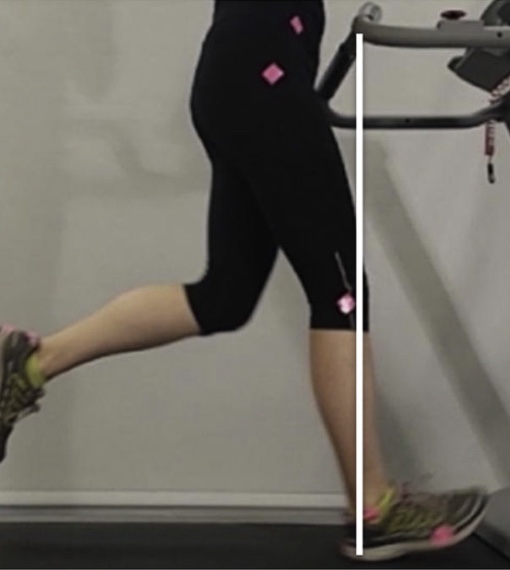
Overstriding during running
Treatment focused on more than just education. During the session, we:
- Provided cueing and education on efficient running mechanics
- Facilitated hip and knee extensors to improve swing-phase control
- Used Functional Manual Therapy to improve eccentric hamstring control in standing
One of the techniques used was PNF (Proprioceptive Neuromuscular Facilitation). This is not an isolated hamstring exercise—it involves a coordinated lower-extremity movement pattern including:
- Pelvic anterior depression
- Hip extension, external rotation, and adduction
- Ankle inversion and plantarflexion
By training the entire movement pattern, not just individual muscles, the runner demonstrated immediate improvement in running mechanics and reported running without pain after the session.
A Holistic Approach to Runner’s Knee Pain
We provide more than just traditional physical therapy. Our approach is:
- Individualized
- Whole-body focused
- Root-cause driven
By addressing how your body moves as a system, rather than treating the knee in isolation, we help runners recover faster, more efficiently, and with better long-term results.
If knee pain is limiting your running, it may be time to look beyond the knee.