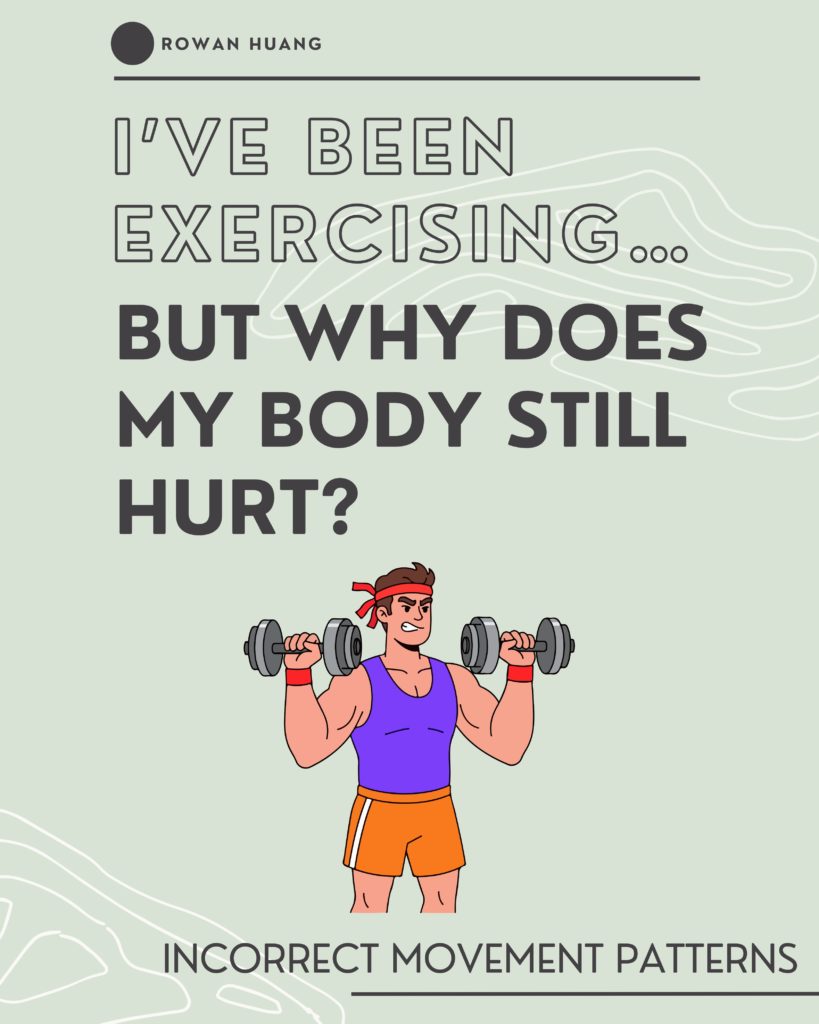
Have you ever tried to prevent pain or hoped exercise would fix your discomfort, only to find that once you started working out consistently, more issues showed up?
Or the pain you wanted to solve… never really went away?
One common reason: faulty movement patterns.
Bilateral exercises can mask differences between sides, causing you to overlook reduced strength or control on one side.
When we compared this patient’s left and right sides during a single-arm shoulder press, clear compensation patterns appeared.
On the right side, you can see his neck shifting to the right and his spine deviating as he presses.
Even on the left side, there is still some noticeable spinal deviation, showing how the body “finds a way” to complete the movement.
These compensations can build up over time, eventually leading to tightness and discomfort after the exercise.
Over time, repeating the same faulty pattern can gradually create stress and lead to pain, even if you’re “exercising.”
That’s why having a physical therapist assess your movement is so important.
We help you catch these problems early or pinpoint exactly which part of your movement is causing symptoms, so you can return to the activities and workouts you love.
Due to our specialized training, clinical experience, and the ability to spot subtle details in your movement that others may miss,
no one understands your body better than your physical therapist!

Need a deeper look at your movement patterns?
👉 Book a session and let a physical therapist guide you toward better function and less pain.