
Sometimes, the Problem Is Too Much Tension
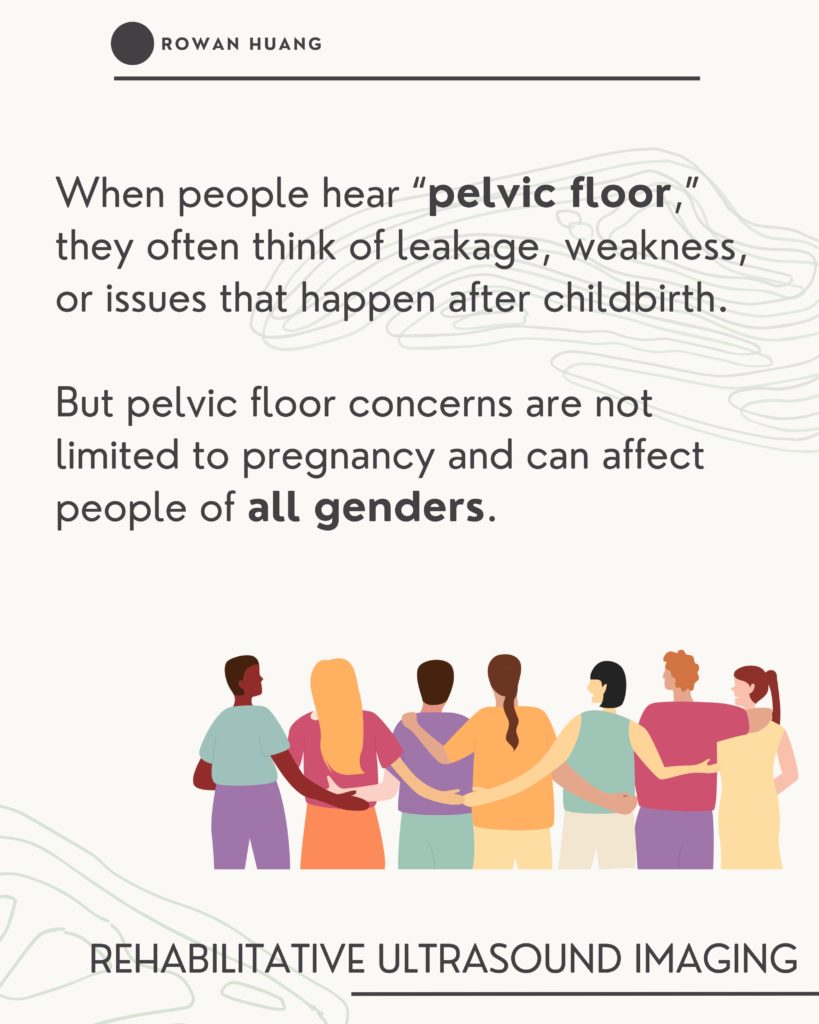
When people hear the term “pelvic floor,” many immediately think of urinary leakage, muscle weakness, or problems that occur after pregnancy and childbirth.
While these concerns are real, they represent only part of the picture.
Pelvic floor dysfunction is not limited to pregnancy, and it can affect people of all genders and ages.

In fact, in clinical practice, one of the most common patterns we see is not weakness, but pelvic floor muscles that are overactive, tense, and unable to fully relax.
This is why someone can experience significant pelvic floor symptoms without ever having leakage.
What Does It Mean When the Pelvic Floor Is “Too Tight”?
The pelvic floor is a group of muscles that forms the base of the pelvis. These muscles support the bladder, bowel, and reproductive organs, help control urination and bowel movements, contribute to sexual function, and work closely with breathing and core stability.
For the pelvic floor to function well, it needs to do more than contract. It must also:
- Relax and lengthen to allow urination and bowel movements
- Respond dynamically to breathing and changes in abdominal pressure
- Contract only when needed, rather than staying “on” all the time
When the pelvic floor is constantly tense or overactive, the muscles may lose their ability to relax and coordinate properly. Over time, this excessive tension can interfere with normal function and create symptoms—even if the muscles are not truly weak.
Common Signs of a Tight or Overactive Pelvic Floor
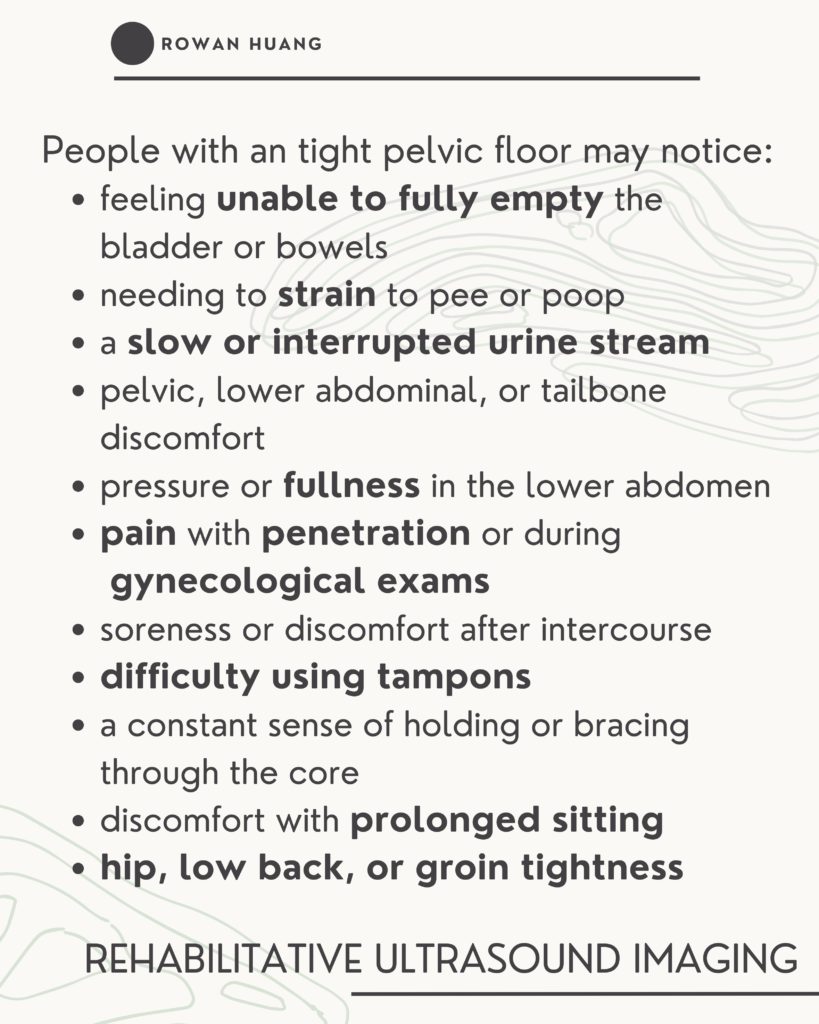
A pelvic floor that is too tight may present in subtle ways, including:
- Difficulty fully emptying the bladder or bowels
- Needing to strain during urination or bowel movements
- A slow, weak, or interrupted urine stream
- Pelvic, lower abdominal, or tailbone discomfort
- A sensation of pressure or fullness in the lower abdomen
- Pain with penetration or discomfort during gynecological exams
- Soreness or pain after intercourse
- Difficulty using tampons
- A constant feeling of “holding,” bracing, or gripping through the core
- Discomfort with prolonged sitting
- Hip, low back, or groin tightness
Because these symptoms often develop gradually, they are frequently overlooked or dismissed as unrelated issues. However, they can be important signs of pelvic floor dysfunction.
Why More Kegel Exercises Are Not Always the Answer
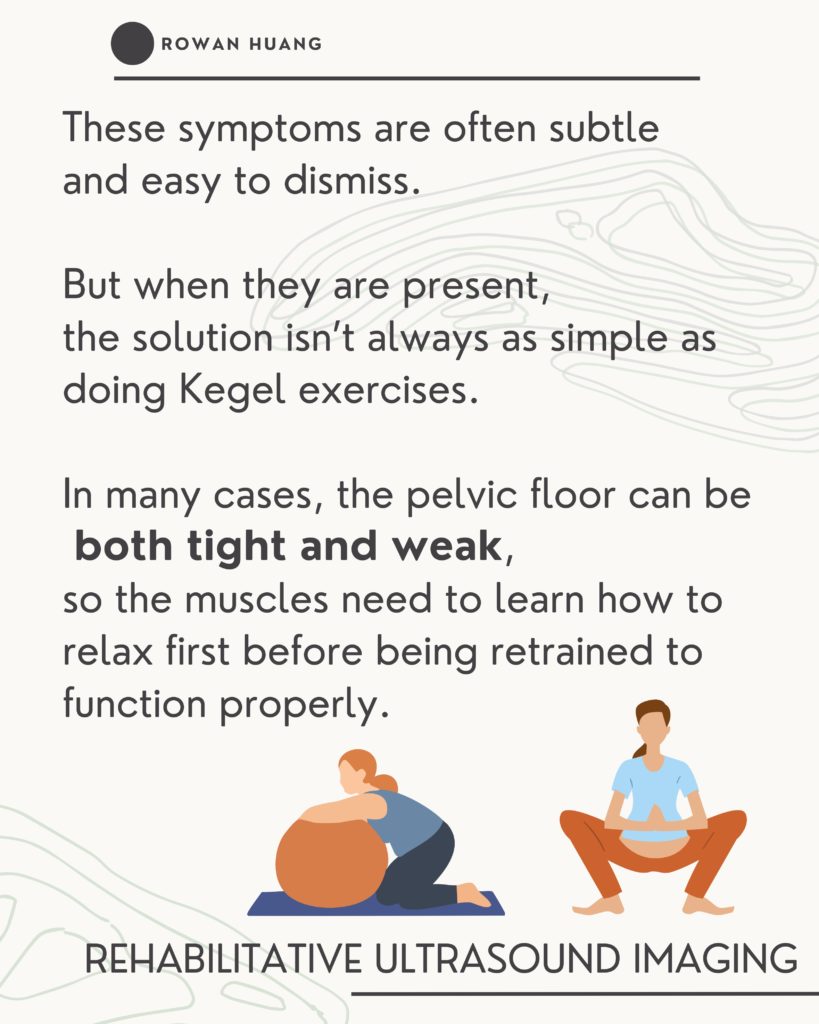
Kegel exercises focus on strengthening the pelvic floor through repeated contraction. While strengthening can be helpful for some individuals, it is not always appropriate as a first step.
In many cases, the pelvic floor is both tight and weak at the same time. Muscles that remain chronically tense often become inefficient—they fatigue easily, lack coordination, and struggle to generate effective force when it is actually needed.
For these individuals, immediately adding more strengthening exercises can worsen symptoms by increasing tension rather than restoring balance.
Instead, the initial focus often needs to be on:
- Learning how to relax and lengthen the pelvic floor
- Improving breathing patterns and pressure management
- Restoring coordination between the pelvic floor, diaphragm, and abdominal muscles
Only after relaxation and coordination are restored does strengthening become truly effective.
Pelvic Floor Dysfunction Is Not Just a Women’s Issue
Pelvic floor issues are often discussed in the context of pregnancy or women’s health, but they affect men as well.
Men can experience pelvic pain, urinary or bowel difficulties, core tension, and movement restrictions related to pelvic floor dysfunction. Recognizing this is important for timely assessment and appropriate treatment, regardless of gender.
What Ultrasound Can Tell Us About Pelvic Floor Function
Rehabilitative ultrasound imaging, such as a transabdominal ultrasound, allows clinicians to observe how the pelvic floor behaves during breathing and movement.
In some individuals, we see limited or minimal pelvic floor movement with breathing. This pattern is often associated with excessive muscle tension and poor relaxation, rather than simple weakness. Ultrasound can be a valuable tool for assessment, education, and guided retraining of pelvic floor function.
The Importance of a Proper Assessment
Because pelvic floor dysfunction can present in many different ways, a thorough and individualized assessment is essential.
Rather than assuming weakness and prescribing strengthening exercises right away, a proper evaluation helps determine:
- Whether the pelvic floor is overactive, underactive, or both
- How well the muscles coordinate with breathing and movement
- What the most appropriate starting point for treatment should be
If these symptoms sound familiar, seeking a professional assessment can help identify the underlying issue and guide a more effective, targeted approach to recovery.
Want to learn more or book a session?
Book your visit here with Dr. Rowan, a physical therapist trained in Herman & Wallace Rehabilitative Ultrasound Imaging (RUSI), and begin your recovery journey!