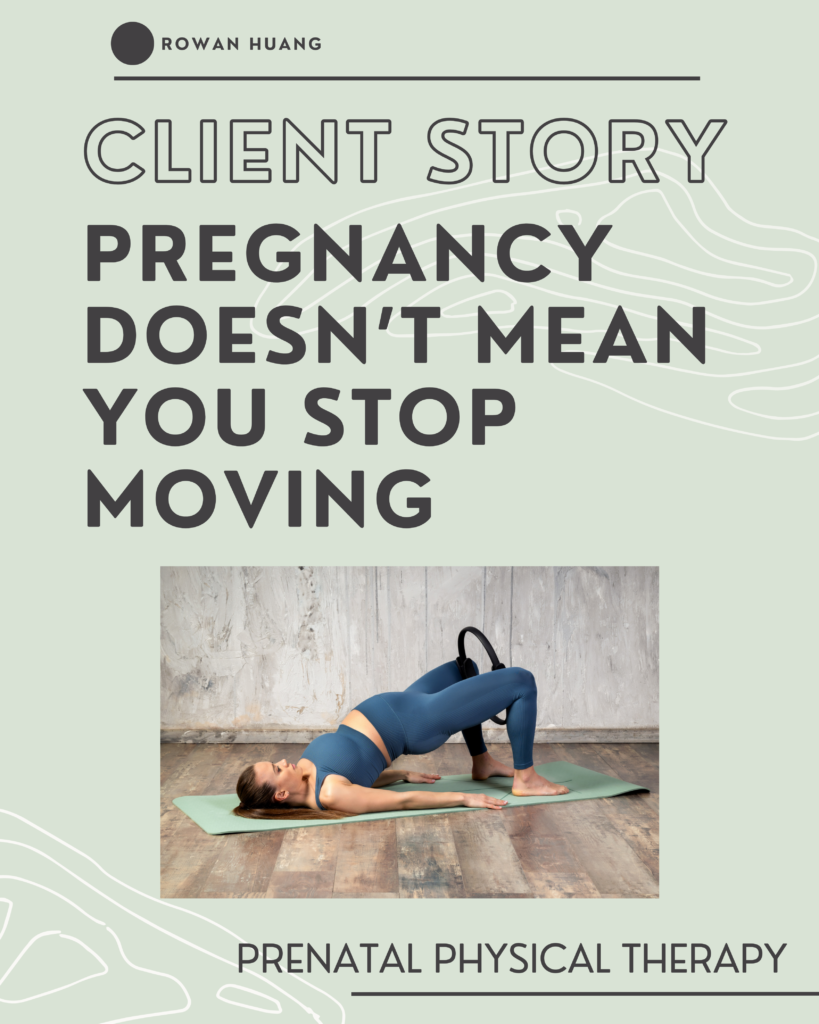
Pregnancy is often misunderstood as a time of restriction.
Many women are told to “be careful,” “avoid too much movement,” or “just rest.” While caution is important, complete inactivity is not the answer.
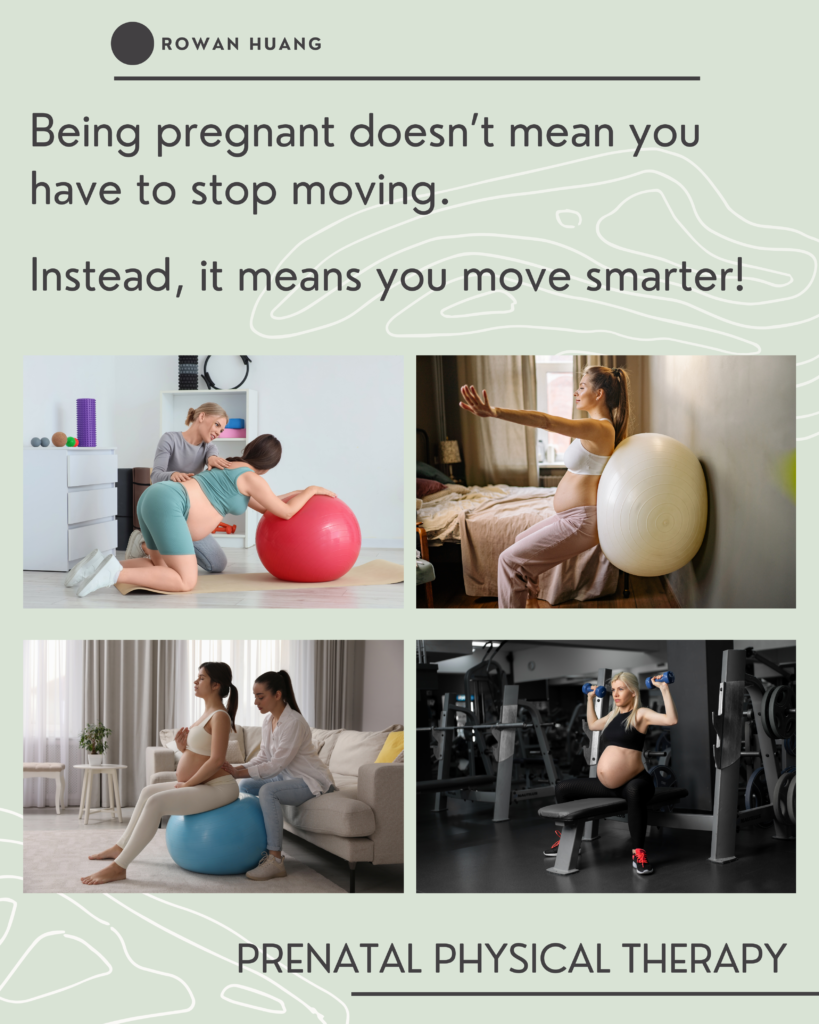
Being pregnant doesn’t mean you have to stop moving.
It means you move smarter.
A Client Story
A pregnant client recently came in with:
- Low back pain
- Long-standing neck tension
- Lower extremity swelling
- A sedentary work lifestyle
She did not have a regular exercise routine before pregnancy.
After becoming pregnant, her symptoms worsened, and she began to wonder:
“Is it safe for me to exercise?”
This is one of the most common questions I hear in prenatal physical therapy.
Is Exercise Safe During Pregnancy?
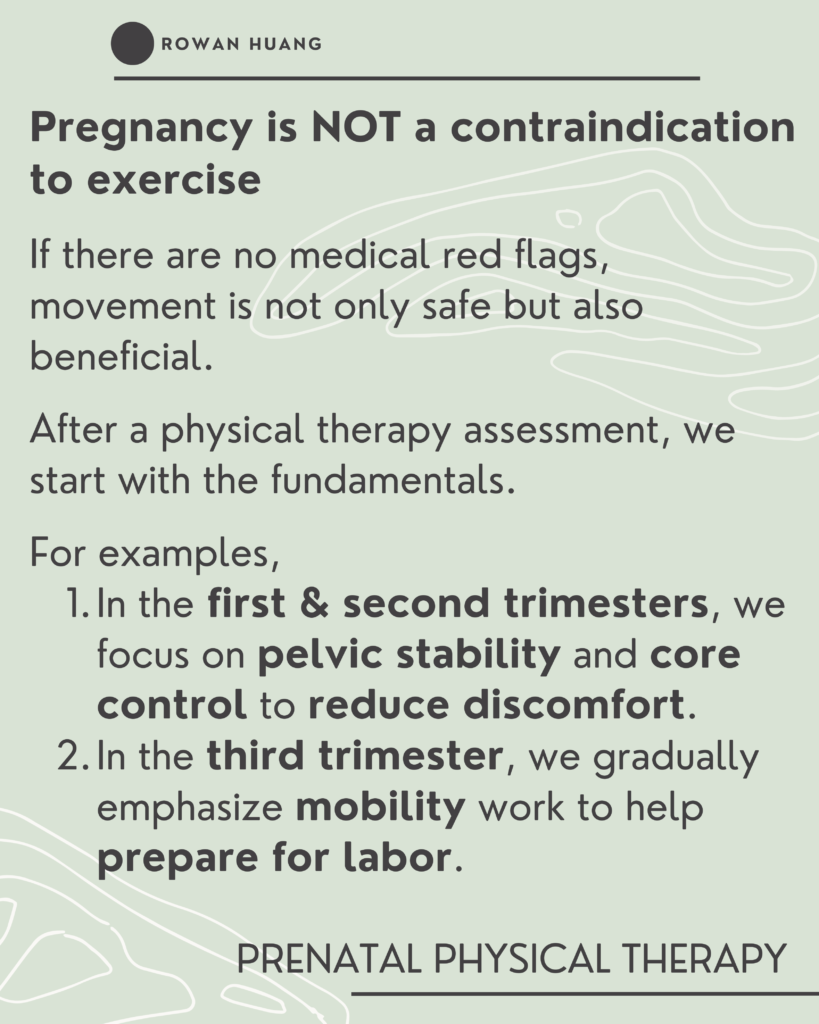
Pregnancy is not a contraindication to exercise.
If there are no medical red flags, movement is not only safe — it is beneficial.
Current research supports regular physical activity throughout pregnancy. In fact, avoiding movement altogether may contribute to increased discomfort, reduced endurance, and slower recovery postpartum.
How We Approach Prenatal Exercise
Every pregnancy is different, which is why exercise must be individualized.
After a comprehensive physical therapy assessment, we start with the fundamentals.
First & Second Trimester: Build Stability
During early and mid-pregnancy, we focus on:
- Pelvic stability
- Core control
- Load tolerance
- Symptom reduction
The goal is to create a stable foundation that supports the growing changes in the body.
Third Trimester: Emphasize Mobility
As pregnancy progresses, we gradually shift emphasis toward:
- Pelvic mobility
- Movement variability
- Functional positioning
- Preparation for labor
Birth is a physical event. Preparation matters.
What Does Research Recommend?
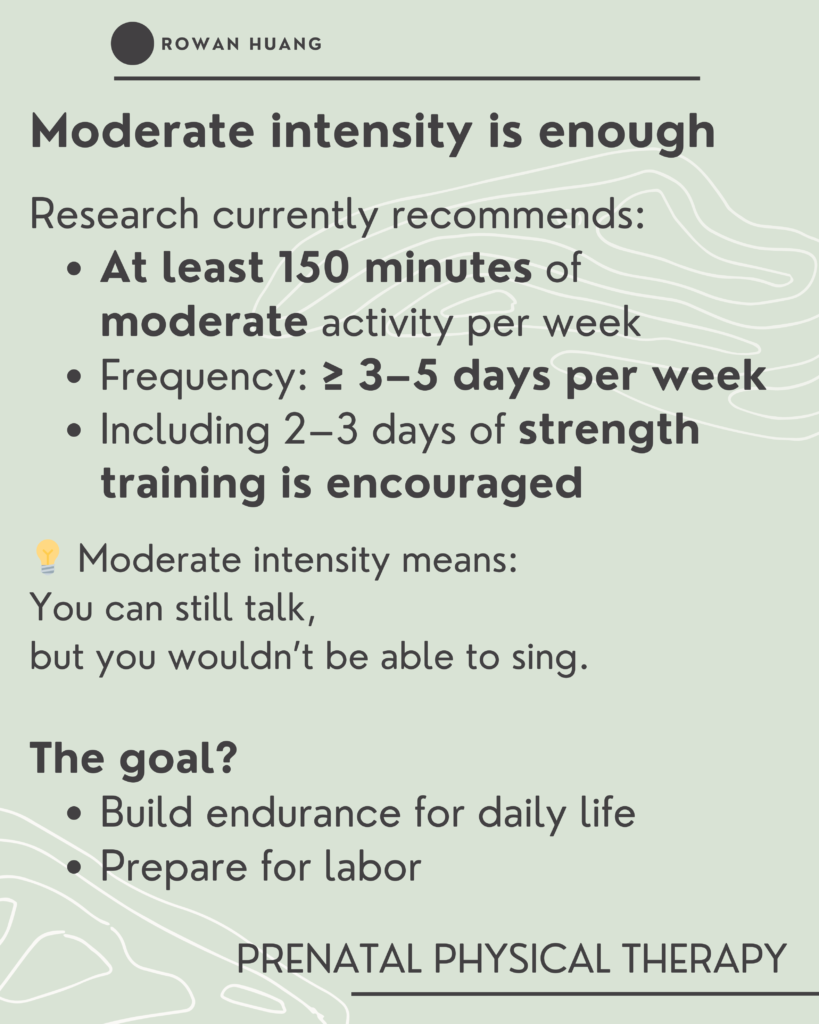
Current guidelines recommend:
- At least 150 minutes of moderate-intensity activity per week
- Spread across 3–5 days
- With strength training incorporated when appropriate
Moderate intensity means you can carry on a conversation, but you wouldn’t be able to sing.
High-intensity or explosive training is not necessary. Consistency and appropriate progression are far more important.
Important Considerations
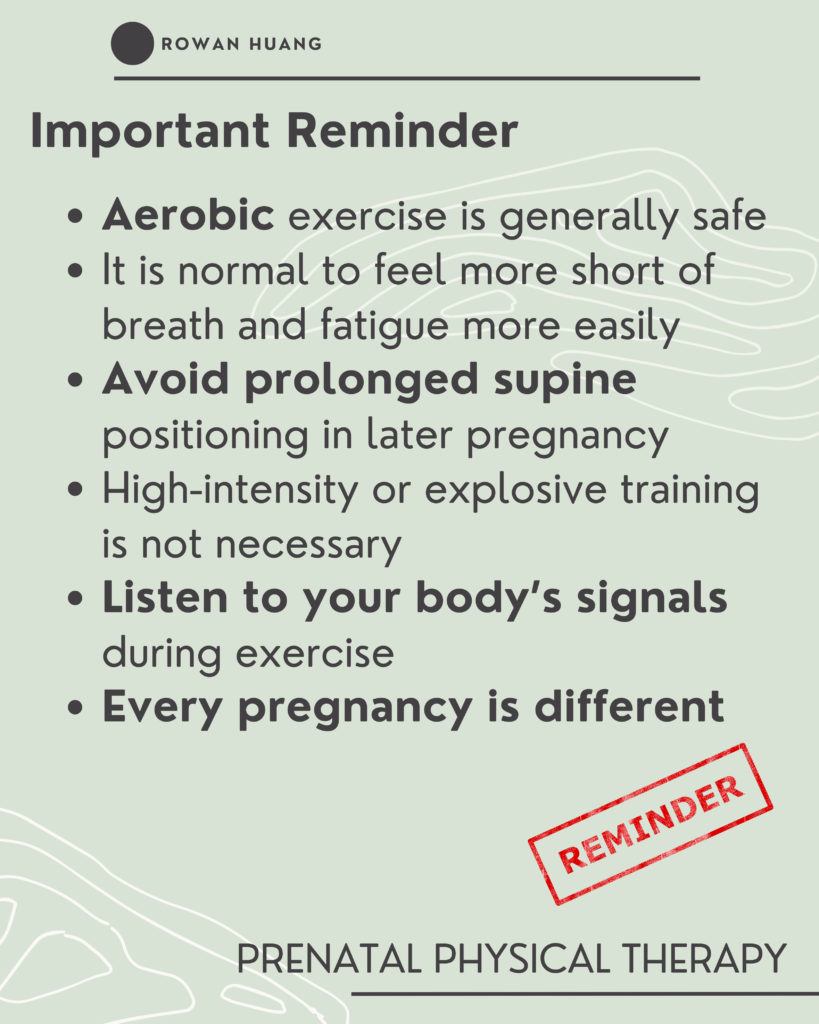
- Aerobic exercise is generally safe
- It is normal to feel more short of breath and fatigue more easily
- Avoid prolonged supine positioning in later pregnancy
- Listen to your body’s signals
- Exercise intensity should be individualized based on pre-pregnancy fitness level and current capacity
The Benefits of Exercising During Pregnancy
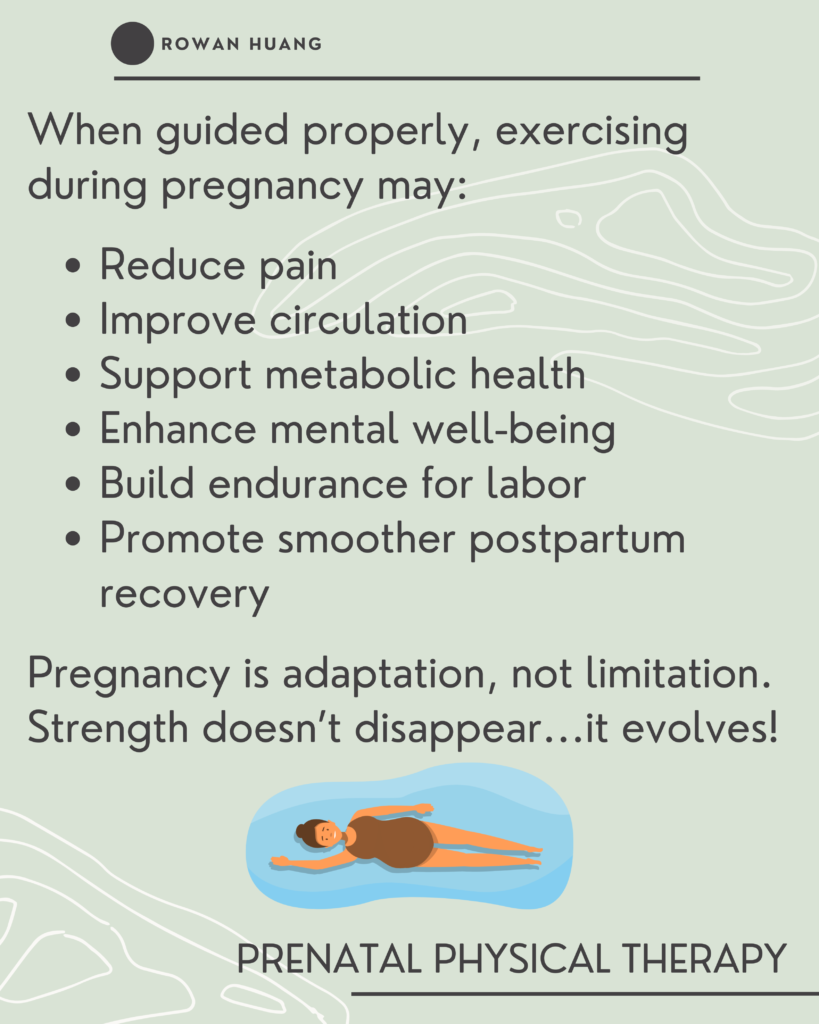
When guided properly, exercise during pregnancy may:
- Reduce back and pelvic discomfort
- Improve circulation and reduce swelling
- Support metabolic health
- Enhance mental well-being
- Build endurance for labor
- Promote smoother postpartum recovery
Pregnancy is adaptation, not limitation.
Strength does not disappear during pregnancy.
It evolves.
With appropriate guidance, movement becomes preparation — not risk.
Want to learn more or book a session?
Book your visit here and start your recovery journey!
https://docs.google.com/forms/d/e/1FAIpQLScZFwLgKq3fSEROF3iT38pa12RG9A-hAgK7OX_HkdqQjnpMrw/viewform