For climbers, our hands are our most valuable tools. The combined network of tendons, ligaments, and pulleys in our fingers allows us to grip and hold through the path. However, this same system is also vulnerable to injury, and one of most common injuries is the pulley injury.
What is a Pulley Injury?
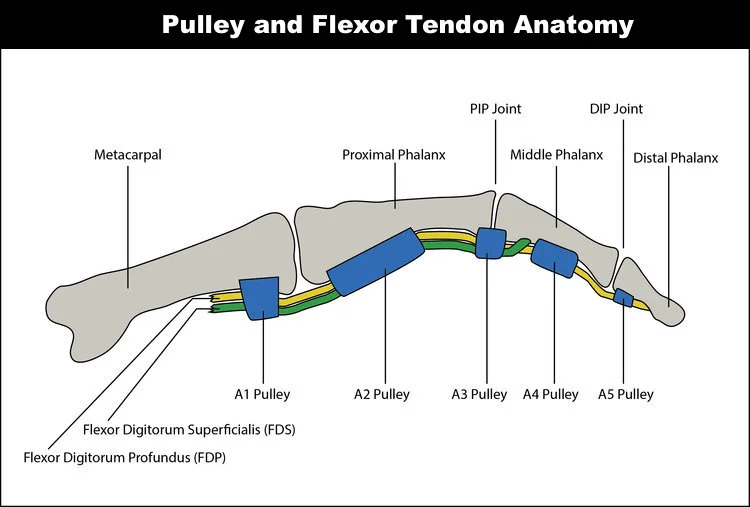
Think of your finger tendons like a rope and the pulleys as the rings that hold that rope close to the bone. These pulleys, specifically the A2, A3, and A4 pulleys, are crucial for efficient finger flexion and maintaining the mechanical advantage of the flexor tendons. A pulley injury occurs when these rings are stretched or torn, often from a sudden, forceful load, like a dynamic movement or a crimp grip on a small hold.
Recognizing a Pulley Injury
If you suspect a pulley injury, you might experience:
Pain
Swelling
“Bowing” of Tendon
Loss of Range of Motion
If you experience these symptoms, it’s crucial to stop climbing immediately and rest the finger. Pushing through the pain can worsen the injury.
The Role of H-Taping
While not a substitute for professional medical advice, H-taping can provide support to a healing pulley and help prevent further injury. The goal of H-taping is to create an external support structure that mimics the function of the injured pulley.
How to H-Tape for a Pulley Injury:
- Cut the Tape
- Make the “H”
- Position the Tape
- Apply the tape with a slight bend
- Secure the “H”
Disclaimer: Taping is a supportive measure, not a cure. Always consult a healthcare professional for an accurate diagnosis and treatment plan.
How Physical Therapy Can Help
Physical therapy is a cornerstone of recovery for a pulley injury. A qualified physical therapist can:
Assess the Injury: Accurately diagnose the severity of the injury and create a personalized treatment plan.
Reduce Pain and Inflammation: Use techniques like massage, manual therapy, and modalities to decrease pain and swelling.
Restore Mobility and Strength: Guide you through a series of exercises to regain range of motion and rebuild the strength of your finger and hand. This often includes progressive loading exercises to help the pulley tissue heal and become stronger.
Provide Climbing-Specific Rehabilitation: A climbing-savvy physical therapist can help you modify your climbing technique and training to prevent re-injury.
Shockwave Therapy: A Modern Approach
Shockwave therapy is a non-invasive treatment that uses high-energy sound waves to stimulate the healing process. While it’s a newer treatment modality for pulley injuries, it’s gaining traction in the climbing community.
https://funcphysio.com/shockwave-therapy-radial-pressure-wave/
Conclusion: A Holistic Approach to Recovery
A pulley injury is a frustrating setback, but it’s not the end of your climbing journey. By taking a proactive approach that includes proper rest, supportive taping, and a comprehensive rehabilitation plan, you can recover and return to the rock stronger than before. Remember, listen to your body, seek professional help, and be patient with the healing process. Contact us to book an initial examination with our climber PT!
Happy climbing!


