What is Pelvic Health Physical Therapy?
Pelvic health physical therapy (also known as pelvic floor therapy) is a specialized, evidence-based, non-surgical approach to treating issues related to the pelvic floor muscles. These muscles are located at the base of your pelvis and play a crucial role in bladder control, bowel function, sexual health, core stability, and overall movement support.
When the pelvic floor is weak, overly tight, or not coordinating well with breathing and core muscles, you may experience symptoms such as bladder leakage, pelvic pain, constipation, sexual dysfunction, or persistent pelvic or lower back discomfort. Pelvic health physical therapy focuses on strengthening, relaxing, and retraining these muscles and surrounding tissues to restore normal function and coordination.
It is important to know that pelvic floor dysfunction is not always caused by weakness.
In some cases, the muscles may be overactive, tight, or poorly coordinated, and doing the wrong exercises can actually make symptoms worse. Proper evaluation is key to understanding what your pelvic floor truly needs. To learn more, read our blog: Pelvic Floor Dysfunction Isn’t Always About Weakness.
In practical terms, pelvic health physical therapy can improve bladder and bowel control, reduce pelvic or lower back pain, and enhance sexual function. It is also a vital part of women’s health physical therapy, providing important support during pregnancy and postpartum recovery.
Beyond pregnancy-related care, pelvic health physical therapy also plays an important role in supporting individuals with active lifestyles, where the pelvic floor must adapt to higher physical demands and repeated loading. Addressing pelvic floor function as part of the larger movement system helps improve stability, coordination, and long-term movement health.
Overall, pelvic health physical therapy benefits individuals of all ages and genders dealing with pelvic floor concerns. The goal is to help you regain strength, control, and confidence in your pelvic region—so you can move, exercise, and live your daily life without discomfort or limitation.
Who is Pelvic Health Physical Therapy For?
Pelvic health physical therapy is for “anyone with a pelvis“
People of all genders and ages can experience pelvic floor problems, and pelvic physical therapy can help address these concerns at every stage of life.
Pelvic health physical therapy has long been an important part of women’s health, especially during pregnancy, postpartum recovery, and menopause. Many women seek care for concerns such as bladder leakage (urinary incontinence), pelvic organ prolapse (a feeling of heaviness or “bulge”), pelvic pain, or difficulty returning to exercise after childbirth. Pelvic physical therapy focuses on restoring strength, coordination, and confidence in the pelvic floor and core.
Pelvic health physical therapy is “not just for women“
Men can also experience pelvic floor dysfunction and benefit greatly from treatment. Common reasons men seek pelvic physical therapy include urinary incontinence (such as after prostate surgery), chronic pelvic pain, bowel dysfunction, or persistent core and pelvic discomfort. Older adults may also experience pelvic floor weakness that affects bladder or bowel control. If pelvic symptoms are interfering with your daily life, pelvic health physical therapy may be an important part of your care.
Pelvic health physical therapy is “also for athletes“
Pelvic floor problems don’t only occur during pregnancy or later in life. Athletes and highly active individuals can also experience pelvic floor dysfunction, even if they are young, fit, and otherwise healthy.
Runners, weightlifters, dancers, gymnasts, basketball players, and CrossFit athletes place repeated demands on the pelvic floor through high-impact movements, heavy lifting, and rapid changes in pressure. When the pelvic floor muscles are not coordinating well with breathing and core control—or are overworked without adequate recovery—symptoms can develop over time.
In short, anyone with pelvic floor muscles (and that’s all of us!) who is experiencing problems in that area could be a candidate for pelvic health physical therapy. If you’re unsure, a pelvic health therapist can evaluate you and determine if this approach is appropriate for your situation.
Common Symptoms We Treat
Pelvic health physical therapy can address a wide range of symptoms and conditions that originate from pelvic floor dysfunction. Here are some of the common problems we treat:
- Bladder Control Issues (Incontinence & Urgency)
Leaking urine with activities like laughing, coughing, sneezing, or exercise, as well as feeling sudden urgency or needing to rush to the bathroom frequently. Pelvic health physical therapy helps retrain the pelvic floor and bladder to improve control and confidence. - Bowel Control Issues (Constipation or Leakage)
Straining with bowel movements, feeling of incomplete emptying, or difficulty controlling gas or stool. Pelvic floor therapy addresses muscle coordination and relaxation to support healthier bowel function. - Pelvic Pain & Discomfort
Ongoing pain in the lower abdomen, pelvis, tailbone, or genital area. This may include conditions such as chronic pelvic pain or endometriosis-related discomfort. Treatment focuses on gentle manual techniques, movement retraining, and improving muscle coordination. - Pelvic Organ Prolapse Symptoms
A feeling of heaviness, pressure, or a visible bulge in the vaginal area, often occurring after childbirth or during menopause. Therapy focuses on safe strengthening and coordination exercises to better support the pelvic organs. - Pain with Intercourse (Dyspareunia)
Pain during or after sexual activity. Pelvic floor therapy can help relax overactive muscles, improve tissue mobility, and make intimacy more comfortable again. - Pregnancy-Related Pelvic and Core Concerns (Prenatal Care)
Discomfort during pregnancy such as pelvic pain, low back or hip pain, urinary leakage, pelvic pressure, or difficulty with posture and movement. Pelvic health physical therapy during pregnancy focuses on safe, gentle care to reduce pain, improve breathing and posture, support pelvic floor coordination, and help you stay active and comfortable as your body changes. - Postpartum Recovery Concerns
Difficulty regaining strength or control after having a baby. This may include abdominal separation (diastasis recti), pelvic pain, or scar discomfort after a C-section or tearing. We guide new parents through a safe and gradual recovery process. - Tailbone (Coccyx) Pain
Pain with sitting or after a fall onto the tailbone. Treatment may include manual therapy and movement strategies to reduce tension and improve comfort. - Hip, Low Back, or SI Joint Pain Related to Pelvic Floor Function
Persistent hip or low back pain that does not fully resolve with traditional treatment may be connected to pelvic floor dysfunction. A whole-body approach allows us to address these areas together rather than in isolation.
How We Evaluate (Assessment & Ultrasound)
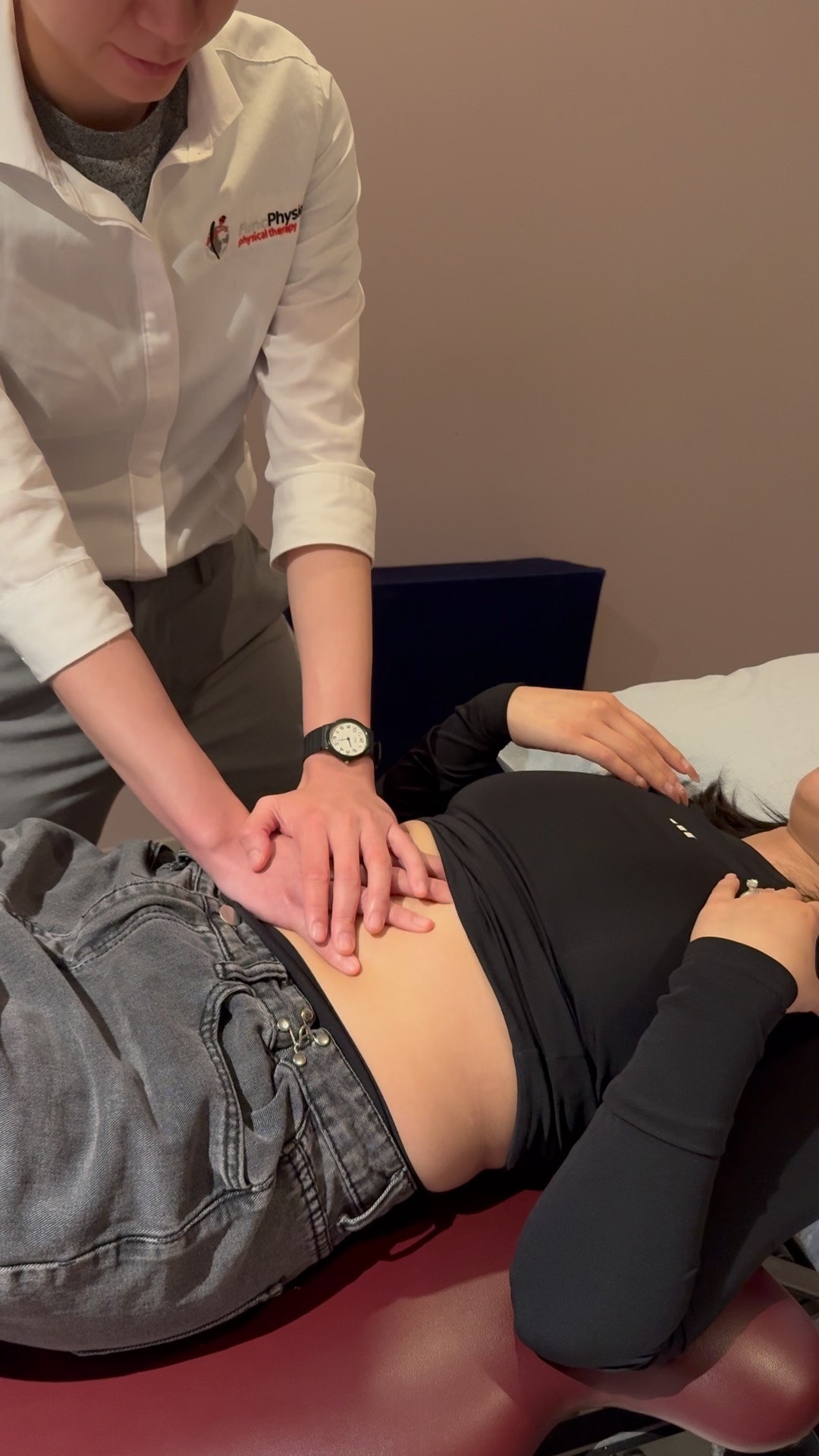
Your first visit to our clinic is all about getting to know you and your symptoms. We start by listening to your story, including your concerns, medical history, and personal goals. From there, we perform a thorough evaluation of your pelvic region. This may include assessing your posture, spine and hip alignment, and the strength, coordination, and flexibility of your core and pelvic floor muscles.
With your consent, our specially trained therapist may also perform a gentle internal examination to better understand how your pelvic floor muscles contract and relax. We explain every step beforehand, and your comfort and privacy are always our top priority. This comprehensive, one-on-one assessment helps us identify factors that may be contributing to bladder symptoms, pelvic pain, or other concerns.
One thing that truly sets our clinic apart is our use of rehabilitative ultrasound imaging
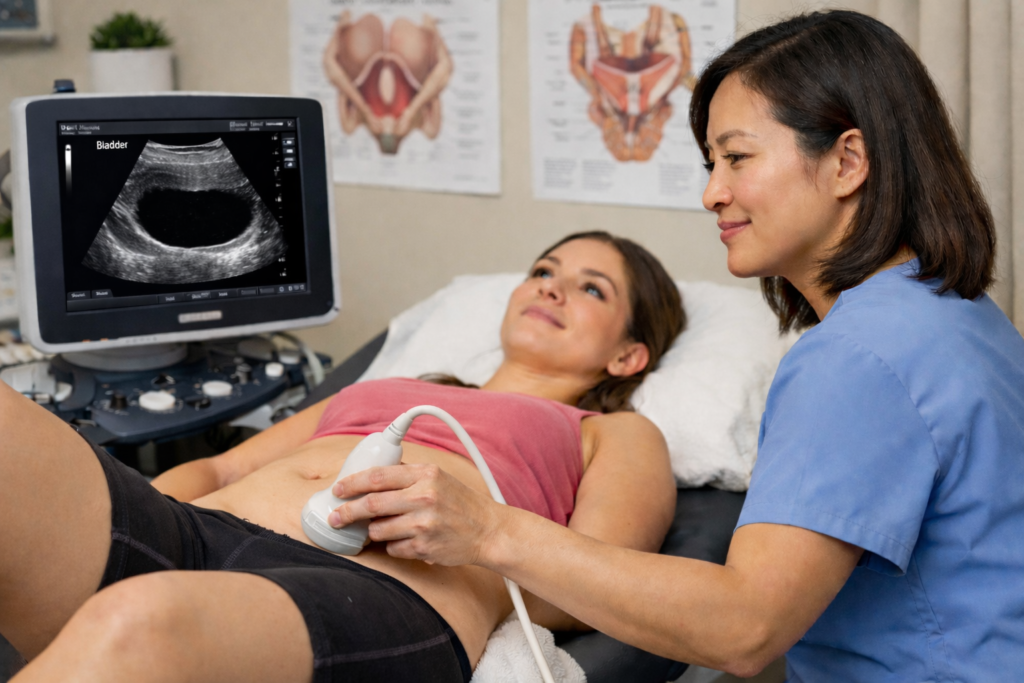
This safe and non-invasive technology allows us to see how your pelvic floor and deep core muscles move in real time. During the assessment, you will lie comfortably in a relaxed position while the therapist uses ultrasound imaging to observe muscle function. Depending on your symptoms and goals, the ultrasound probe may be placed on the lower abdomen or lower back, using a small amount of gel.
In some cases, and only with your consent, ultrasound imaging may also be performed externally near the perineal area to better visualize pelvic floor movement. This will always be discussed and explained in advance, and you are free to decline at any time. Your comfort, privacy, and personal boundaries are always respected.
On the screen, you and your therapist can observe how the pelvic floor and deep core muscles contract, relax, and coordinate with breathing. This real-time visual feedback acts as powerful biofeedback, helping connect what you feel in your body with what your muscles are actually doing. Many patients find it reassuring and empowering to better understand their movement patterns and track progress over time.
By combining ultrasound imaging with hands-on assessment, we are able to create a highly personalized treatment plan tailored to your specific needs and goals.
Curious about what we are actually looking at during ultrasound-guided sessions?
Learn more in our blog: Rehabilitation Ultrasound Imaging: Ever Seen Your Deep Core Muscles Work in Real Time?
Ultrasound-Guided Bladder Training
For patients experiencing urinary urgency, frequency, or leakage, ultrasound imaging allows us to guide bladder training more precisely. By observing how your pelvic floor responds during breathing and muscle activation, we tailor training strategies using real-time feedback rather than guesswork.
To learn more, explore Bladder Training with Ultrasound: Smarter, Safer, More Effective Care.
Throughout the evaluation process, we take time to explain what we see and answer your questions, helping you understand why symptoms are happening so progress can be meaningful and long-lasting.
How Pelvic Health Physical Therapy Can Help
Pelvic health physical therapy focuses on relaxing, strengthening, and retraining your pelvic floor muscles and the surrounding areas to restore normal function and coordination. It’s a conservative (non-surgical) treatment approach – meaning no surgery or major medication regimens are needed. A pelvic health physical therapist will first assess how your pelvic floor muscles are working: are they weak or tight? Are they coordinating with your breathing and other core muscles? Based on this evaluation, they will create a personalized treatment plan for you.
Therapy may include a variety of techniques, such as:
- Targeted exercises to strengthen weak pelvic muscles (for example, tailored Kegel exercises and core strengthening).
- Relaxation and stretching techniques for muscles that are too tight or in spasm, helping them release.
- Biofeedback and breathing training to improve coordination – teaching your pelvic floor to contract and relax at the right times, often in sync with your diaphragm (breathing muscle) and abdominal muscles.
- Hands-on manual therapy (gentle internal or external muscle work, as appropriate) to relieve pain and improve tissue mobility.
- Education and habit training – guidance on bladder habits, bowel routines, posture, and proper exercise techniques that support a healthy pelvic floor.
Throughout this process, the goal is to restore normal strength and control of the pelvic floor. By the end of therapy, your pelvic floor muscles should be working in harmony with the rest of your body – contracting when they’re needed (for example, to maintain continence or support your spine) and relaxing when they should (for example, during bathroom use or sexual activity).
What Makes Our Clinic Different
What sets our clinic apart is a thoughtful, whole-person approach that combines advanced technology, clinical expertise, and a deep understanding of active lifestyles.
1. Personalized, One-on-One 60-Minute Care in a Supportive Environment
Every patient receives one-on-one care for a full 60-minute session with a dedicated physical therapist in a private treatment room. While many clinics offer 45-minute sessions or less, we provide more time to listen, communicate, and address your concerns without feeling rushed.
We understand that pelvic health concerns can feel personal or sensitive, so we prioritize creating a comfortable and judgment-free environment where you feel heard, respected, and supported. The additional time allows for thoughtful assessment, clear explanation, and meaningful hands-on and movement-based care during each visit.
Your care plan is individualized and unrushed, and is designed around your symptoms, goals, and lifestyle to support meaningful and lasting progress.
2. Rehabilitative Ultrasound for Precise Assessment and Biofeedback Training
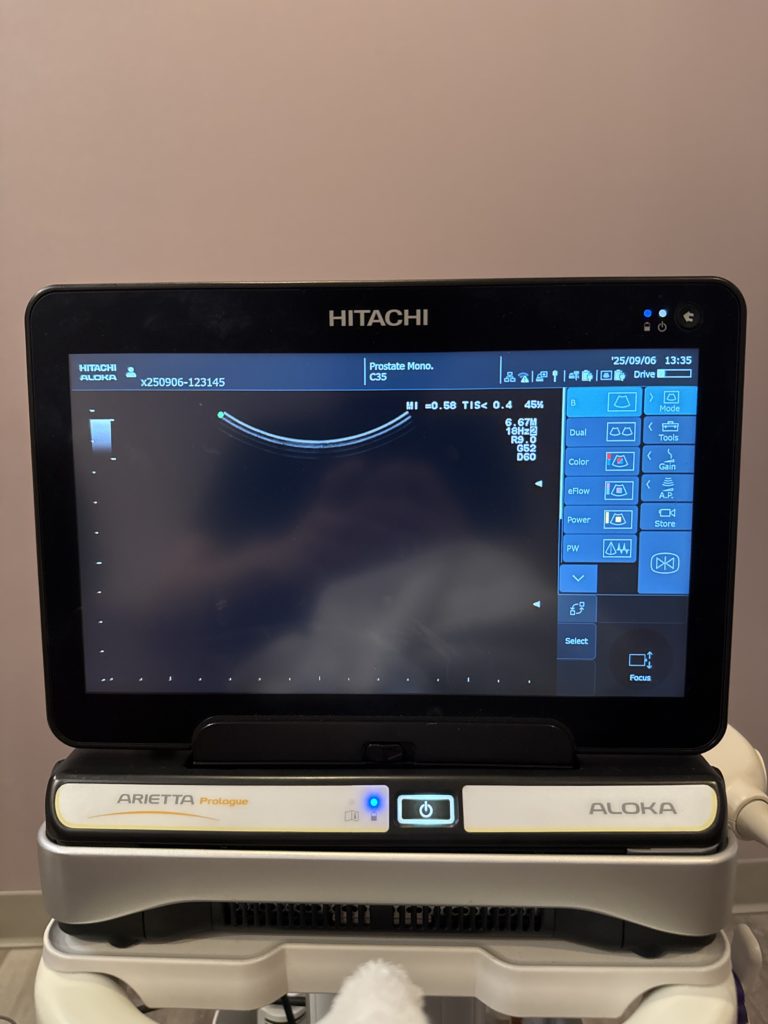
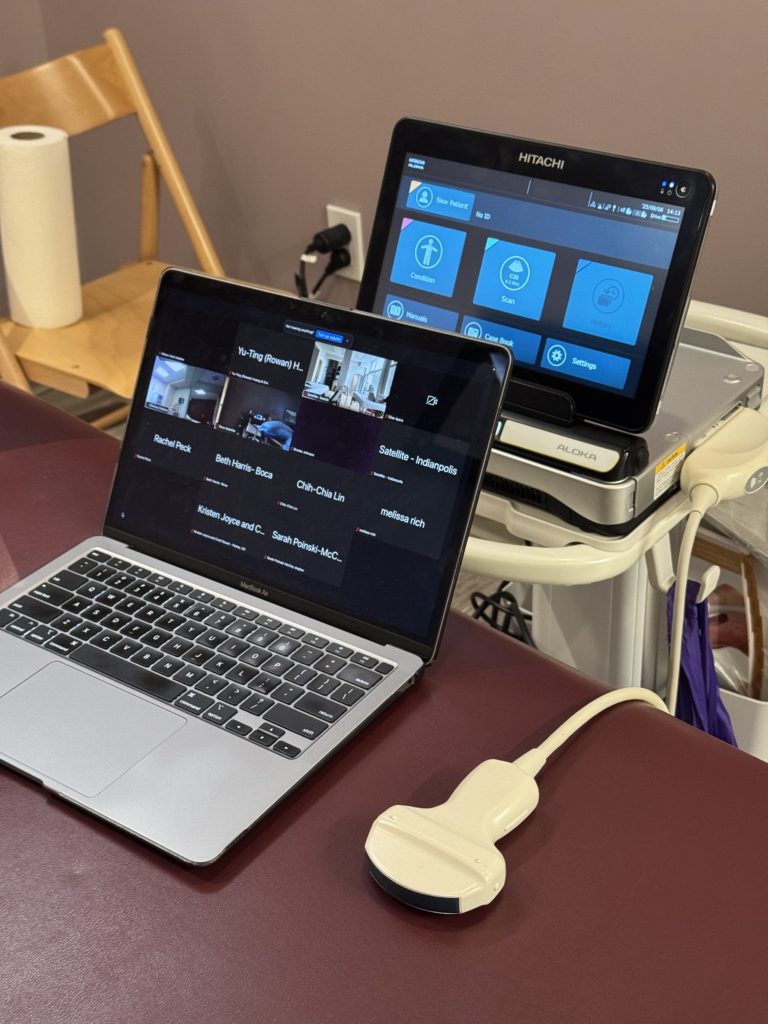
One of the key differences at our clinic is our use of rehabilitative ultrasound imaging as part of both evaluation and treatment.
This non-invasive technology allows us to see how your pelvic floor and deep core muscles move in real time. During exercises, you and your therapist can actually watch the muscles contract, relax, and coordinate on the screen. This visual feedback acts as powerful biofeedback, helping you understand your body and learn the correct muscle patterns more quickly.
Using ultrasound allows us to:
- Identify subtle coordination or timing issues
- Reduce guesswork during training
- Understand what is actually happening inside the pelvic floor
- Improve body awareness and motor learning
- Make exercises more targeted and efficient
As a result, patients often progress more quickly and with greater confidence, knowing they are training the right muscles in the right way.
3. Specialized Pelvic Health with a Whole-Body Approach
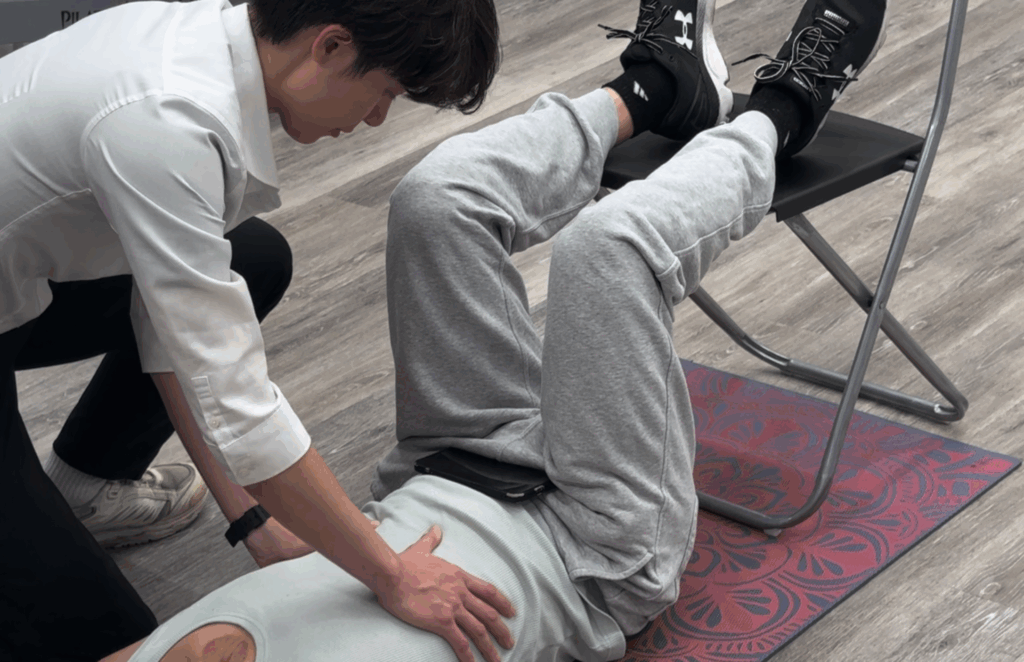
At our clinic, we take the time to really listen to you and understand your story, and we believe pelvic health physical therapy should never treat the pelvic floor in isolation. Many programs focus primarily on the pelvic floor itself, but we understand that pelvic symptoms are often connected to the rest of the body. For example, discomfort in the pelvis may be influenced by the lower back, hip stability, breathing mechanics, or nerves originating from the spine.
Rather than just treating symptoms, we perform a thorough assessment to understand how your spine, hips, nerves, and movement patterns interact. This allows us to identify the root cause of your concerns and create a more complete, effective treatment plan that supports both your daily activities and long-term athletic goals.
To deliver this level of integrated care, you work with pelvic health specialists rather than general physical therapists. Our team brings complementary expertise to address the whole person:
- Dr. Rowan Huang, PT, DPT, MS, CSCS
Dr. Rowan combines pelvic health with orthopedic care and strength-based rehabilitation. With advanced training in Dynamic Neuromuscular Stabilization (DNS) and visceral manual therapy through the Prague School of Rehabilitation, as well as her background as a Certified Strength and Conditioning Specialist (CSCS), she helps patients understand how posture, breathing, and internal organ mobility influence pelvic function. As an active athlete in basketball and table tennis, she specializes in integrating pelvic care with sports rehabilitation and movement optimization. - Dr. Emi Yamanami, PT, DPT, CFMT
Dr. Emi is a Certified Functional Manual Therapist (CFMT) who completed a rigorous two-year residency through the Institute of Physical Art (IPA). Her strength lies in identifying how joint, soft tissue, and visceral restrictions throughout the body contribute to pelvic floor symptoms. By incorporating visceral manipulation through the Barral Institute, she is highly skilled at helping athletes and performers restore the structural integrity needed for high-level function.
To learn more about Dr. Rowan or Dr. Emi, please click on their names above.
Together, Dr. Rowan and Dr. Emi combine ultrasound-guided assessment, manual therapy, and strength-based retraining to provide truly integrated care. Both clinicians have reached advanced levels of training through the Herman & Wallace Pelvic Rehabilitation Institute, ensuring that every aspect of your care—from breathing mechanics to core coordination—is addressed with the highest level of clinical expertise.
4. Multilingual, Culturally Responsive Care
Our clinic offers multilingual pelvic health physical therapy, allowing patients to discuss sensitive pelvic health concerns more comfortably and clearly in a language they feel most at ease with.
- Dr. Rowan Huang provides care in Mandarin (Chinese), Taiwanese, and English.
- Dr. Emi Yamanami provides care in Japanese and English.
Clear communication supports a more comfortable, personalized, and effective treatment experience.

Ready to Feel Like Yourself Again?
We understand that pelvic health concerns are deeply personal and can sometimes feel overwhelming. Please know that you don’t have to navigate these changes alone.
Our goal is to provide a safe, supportive space where you are truly heard and cared for. Whether you are seeking relief from discomfort or looking to feel more like yourself after major life changes, we are here to partner with you at your own pace.
Whenever you’re ready, we’re here to listen. Contact us today to book your appointment.
We are happy to answer any questions you may have or help you schedule a quiet, one-on-one session.


