What is Dynamic Neuromuscular Stabilization (DNS)?
Dynamic Neuromuscular Stabilization (DNS) is an evidence-based rehabilitation and performance approach developed by the Prague School of Rehabilitation in the Czech Republic.
The Science Behind DNS: Developmental Kinesiology
It’s built on the concept of developmental kinesiology — how babies naturally learn to stabilize and move as their nervous system matures.
By revisiting these fundamental movement patterns, DNS helps restore optimal postural control, core stability, and joint alignment, improving both rehabilitation outcomes and athletic performance.
In practice, DNS uses precise manual guidance and specific exercise positions to “re-educate” the body’s motor control system, allowing you to move more efficiently, breathe better, and prevent future injuries.
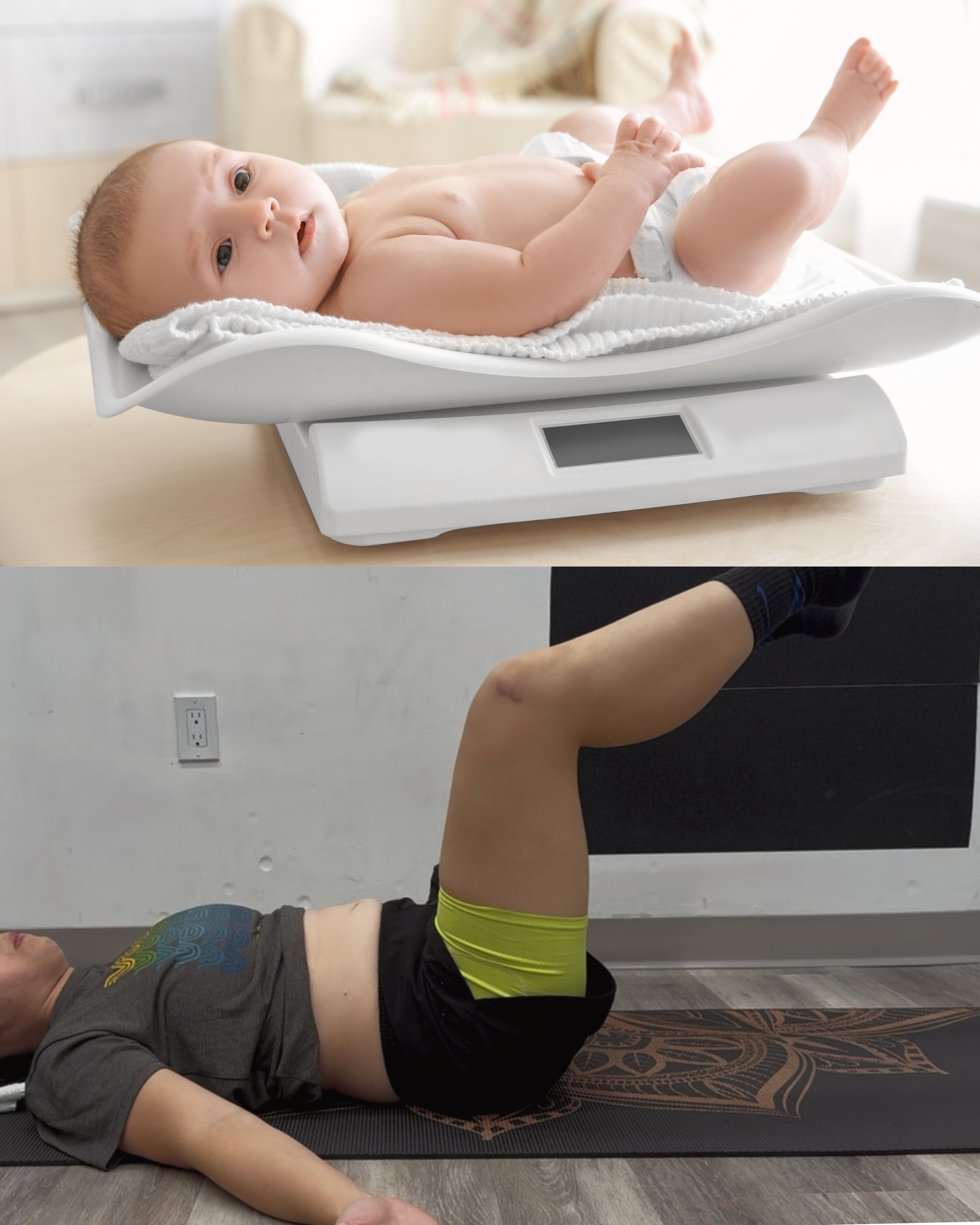



Core Concepts: Intra-Abdominal Pressure & Postural Stability
DNS focuses on rebuilding Intra-Abdominal Pressure (IAP), which is the way your diaphragm, deep core muscles, and pelvic floor work together to create a natural “stabilizing cylinder” for your spine.
When this system works well, your body can stay upright, breathe efficiently, and move smoothly without overusing your neck, back, or hip muscles.
But stress, prolonged postures, or old injuries can disrupt this system. You may start gripping your abs, flaring your ribs, or holding your breath, which weakens your stability over time.
Common Dysfunctional Patterns
Hourglass Syndrome (Abdominal Gripping)
This pattern occurs when the upper abdominal muscles are overused to stabilize the trunk or assist breathing.
Instead of allowing the diaphragm to move naturally, the ribcage gets pulled down, creating a “pinched” or hourglass shape at the waist.
Over time, this can lead to:
- Neck and shoulder tension
- Shallow breathing or breath-holding
- Core instability and lower back discomfort
DNS-based training helps retrain proper diaphragmatic breathing and core activation, restoring natural abdominal expansion and postural balance.
To learn more about Hourglass Syndrome, check out the full blog post here:
https://funcphysio.com/2025/11/08/why-does-my-belly-look-like-an-hourglass-its-a-breathing-issue/

Scissors Syndrome
Scissors Syndrome describes an imbalance where the chest and pelvis tilt toward each other, causing the ribs to flare and the pelvis to rotate anteriorly.
This creates a “scissoring” effect between the diaphragm and pelvic floor, disrupting pressure management and spinal stability.
Common signs include:
- Excessive arch in the lower back
- Weak or overactive pelvic floor
- Hip tightness or low back pain
Through DNS and targeted movement retraining, we work to realign the ribcage–pelvis connection, improve breathing mechanics, and support efficient core control.
Patient Demonstration Example
Non-Ideal 3-Month Prone
In this photo, the patient is in a 3-month prone position, but shows non-ideal postural control.
Common compensations include:
- Excessive lumbar lordosis
- Lack of thoracic extension
- Scapular winging / not resting on the ribcage
- Forward head drop
- Limited abdominal expansion

These patterns suggest the deep stabilizing system isn’t activating effectively.
How DNS Works in Practice
DNS begins with a detailed assessment of your posture, breathing, and movement patterns.
Your therapist identifies compensations — such as rib flare, abdominal gripping, or poor core control — and guides you into specific “developmental positions” (similar to positions babies naturally go through).
Through manual cues, proper positioning, and verbal guides coaching from the physical therapists, you learn to activate the right muscles at the right time.
As your control improves, DNS exercises progress into more challenging positions and eventually into functional movements like squats, lifts, or sport-specific tasks.
The goal is simple: retrain your nervous system to move more efficiently and with less strain.
Who Can Benefit from DNS?
- Individuals with chronic neck, shoulder, or low back pain
- People with breathing dysfunction, rib flare, or poor posture
- Athletes who want better stability, power, and movement efficiency
- Post-surgical or post-injury clients rebuilding foundational control
- Pregnant or postpartum individuals needing breathing and core retraining
- Anyone who feels “tight,” unstable, or easily fatigued during exercise
And it’s not limited to the conditions listed above. DNS is not only for injury recovery, but also enhances everyday movement and long-term performance.
Your physical therapist will perform a thorough, individualized assessment and integrate DNS principles into your treatment plan only when appropriate for your specific movement patterns, goals, and compensation strategies.
Ready to Experience DNS? Book Your Personalized Assessment
Dr. Rowan Huang is certified in several DNS courses through the Prague School of Rehabilitation.
She combines comprehensive physical therapy assessment with DNS principles to analyze movement and compensation patterns, then integrates these findings into a personalized training program.
Don’t wait! Book your personalized DNS evaluation and training session with Dr. Rowan Huang today, and experience how proper neuromuscular stabilization can transform the way you move and feel.


